Which Tyre Do You Need, Budget, Mid-Range or Premium?
Short answer: mid-range suits most drivers. Buy premium if the car is heavy, fast, or does motorway miles in the wet. Buy budget if the mileage is low and the driving is local.
New tyres start from £52 fitted. Part worn starts from £22.
Call 0207 701 8161. Tell us the car and we'll tell you which tier it needs
0207 701 8161What the three tiers actually mean
| Tier | Fitted price (16") | Buy it if |
|---|---|---|
| Budget | from £58 | Low mileage, town driving, older car |
| Mid-range | from £78 | Most drivers, most cars, most of the time |
| Premium | from £105 | Heavy or fast car, motorway miles, wet weather |
The gap isn't badge value. It's wet braking and tread life. A premium tyre stops shorter on a wet road. In dry traffic you'd never notice.
Prices on the website are starting prices. We confirm the exact price for your size and tyre on the phone before we fit anything.
How to read the EU tyre label
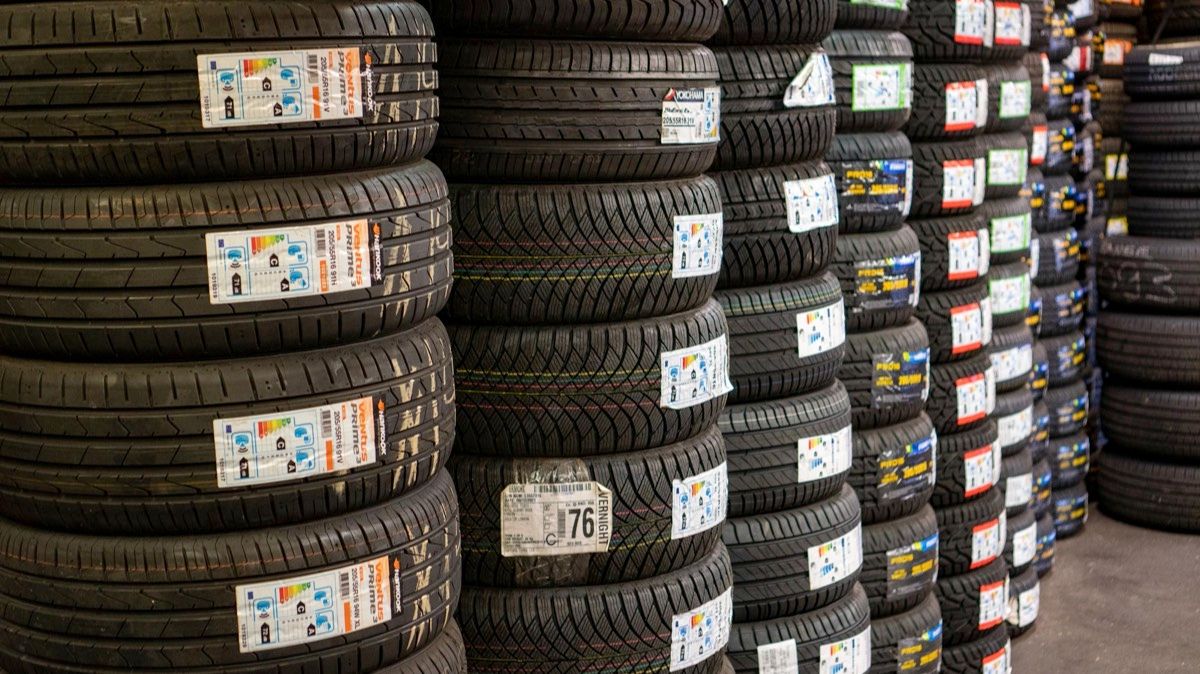
Every new tyre sold in the UK carries a label with three ratings. It's on the sticker and on the paperwork.
Wet grip (A to E)
This is the one that matters. It measures wet braking. An A-rated tyre stops a lot shorter in the wet than an E. If you only look at one letter, look at this one.
Fuel efficiency (A to E)
Rolling resistance. An A-rated tyre uses less fuel than an E over its life. The saving is real but slow, over tens of thousands of miles.
Noise (decibels)
Measured in dB, with a sound-wave icon. Lower is quieter. Below about 70dB is a quiet tyre. Winter-rated tyres also carry a snowflake symbol.
When paying more is worth it
- Heavy cars SUVs, estates, anything with a big battery. More weight, more work for the tyre.
- Motorway mileage Premium tyres last longer, so cost per mile ends up level or lower.
- Wet-weather driving Wet grip is the clearest difference between the tiers.
- Powerful cars A budget tyre on a fast car shows in the handling.
When it isn't
- Low mileage At 4,000 miles a year a premium tyre ages out before it wears out. Rubber hardens with time, not just use.
- An older car worth less than the set Four Michelins on a £1,200 car is around £400 badly spent.
- A car you're selling soon Legal, safe and cheap is the right answer.
- You already need four Mid-range on all four beats premium on two and worn tyres on the back.
Where part worn fits
A good part worn tyre is a used premium or mid-range tyre. That's the point of it.
Ours go on at 5mm minimum, against about 8mm new. You're buying most of a good tyre for less than a whole cheap one. A 16" part worn starts from £34, against from £58 for the cheapest new tyre. That's roughly £24 saved. Against mid-range, around £44. Against premium, around £70.
The honest version: part worn saves roughly £20 to £30 against budget new. The real saving is against the tyres it actually replaces. Here's the law and our 5mm standard.
Questions
Are budget tyres safe?
Yes, if they're road legal and correctly fitted. Every tyre sold in the UK meets minimum standards. Budget tyres trade away wet braking and tread life, not basic safety.
Which letter on the label matters most?
Wet grip. Fuel and noise are worth having. Wet grip is what stops the car.
Is premium worth it on a small car?
Often not. A light car on a mid-range tyre stops well. Spend the difference on getting all four done.
Do more expensive tyres last longer?
Usually yes. That's why cost per mile is similar across tiers, even though the price you pay up front isn't.
My tyres wore unevenly. What now?
Get the alignment checked before you fit new ones. It's free at Wheel Alignment London, Devon Street SE15.
Call 0207 701 8161. 10,000 tyres in stock, 7 days a week, fitted while you wait
0207 701 8161